Precision Protein Conjugation
Smarter protein linking.
Better therapies.

WHAT WE DO
Advancing Safer, Simpler, and More Scalable ADC Technology
Salsa Biotherapeutics offers site-specific cargo attachment via a stable covalent bond using a simple chemical (small molecule) reagent. The inherent covalent bond stability of the Salsa Bio linker provides a route to avoid off-target toxicity. Excitingly, the approach avoids current issues related to ADC manufacturing complexity, potentially offering better scalability and lower cost of goods.
The technology also presents a straight-forward platform to create dual-cargo ADCs, combining payloads with orthogonal methods of action in order to circumvent patient drug resistance.
THE NEED
ADCs Need a More Stable, Site-Specific, and Scalable Conjugation Method
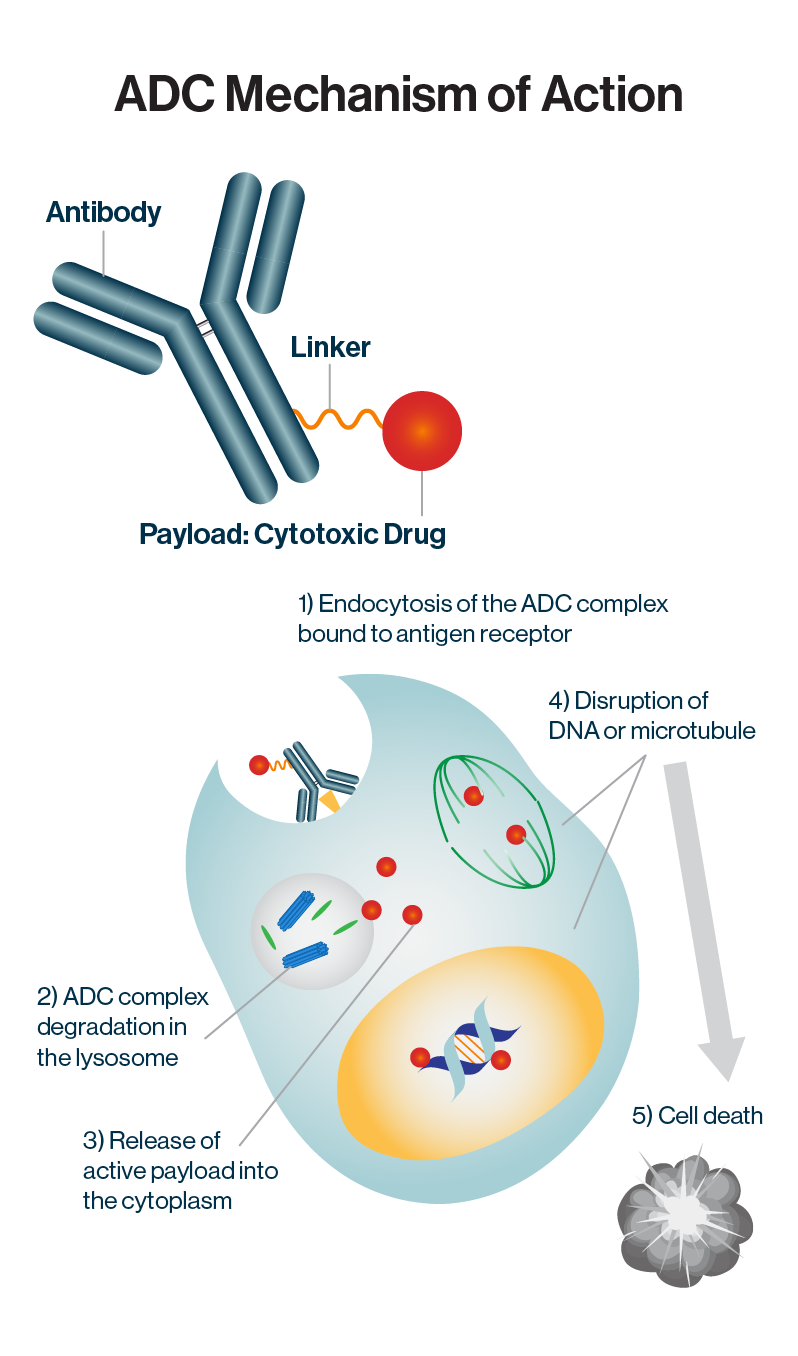
Antibody drug conjugates (ADCs) are a promising new treatment for an expanding range of cancers. They are highly targeted and can deliver chemotherapeutics 100-1000x more potent than traditional chemotherapies.
Although there have been many recent successes, most currently approved ADCs come with blackbox warnings and have shown adverse events. A majority of current ADCs rely on a Cys/maleimide reaction which is suspectable to reversal under conditions that can occur in blood plasma – releasing unconjugated drug which is toxic to off-target cells.
Other recent approaches rely on unnatural amino acids (UAAs) which require custom reagents and specialty know-how, enzymatic conjugation which introduces other costly reagents and purification steps, or methods that require a partial reduction of antibody disulfides which creates potential for instabilities and aggregation.
There is a need for a stable, site-specific, straightforward alternative.
OUR TECHNOLOGY
Precision Protein Conjugation
Salsa Bio conjugation relies on a proprietary small molecule linker forming a covalent bond with specific amino acid residues at targeted, proprietary sites. Salsa-Linkers provide a chemical handle for subsequent drug/cargo attachment – resulting in stable, covalently bonded cargo. The cargo of choice can be connected with a cleavable or non-cleavable linker, depending on what is desired.
OUR TECHNOLOGY
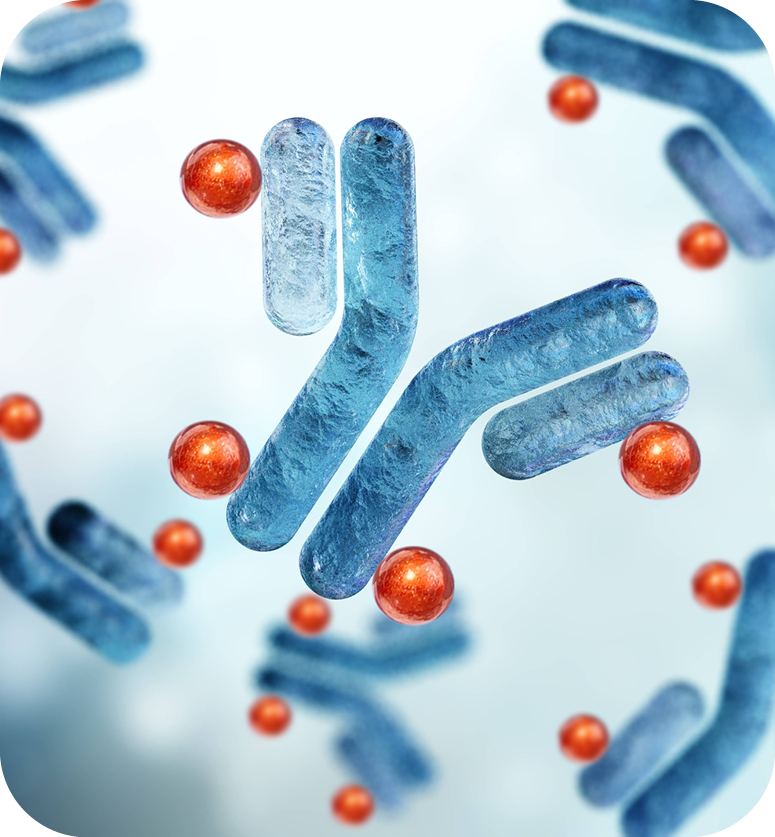
Dual Cargo Treatment
Like traditional cancer monotherapies, almost all advanced stage cancer patients treated with ADCs develop resistance.
Dual-cargo ADCs have been shown to overcome resistance to monotherapy in mouse models.
(Levengood (2017), Angew. Chem. Intl. Ed., 56:733-737)
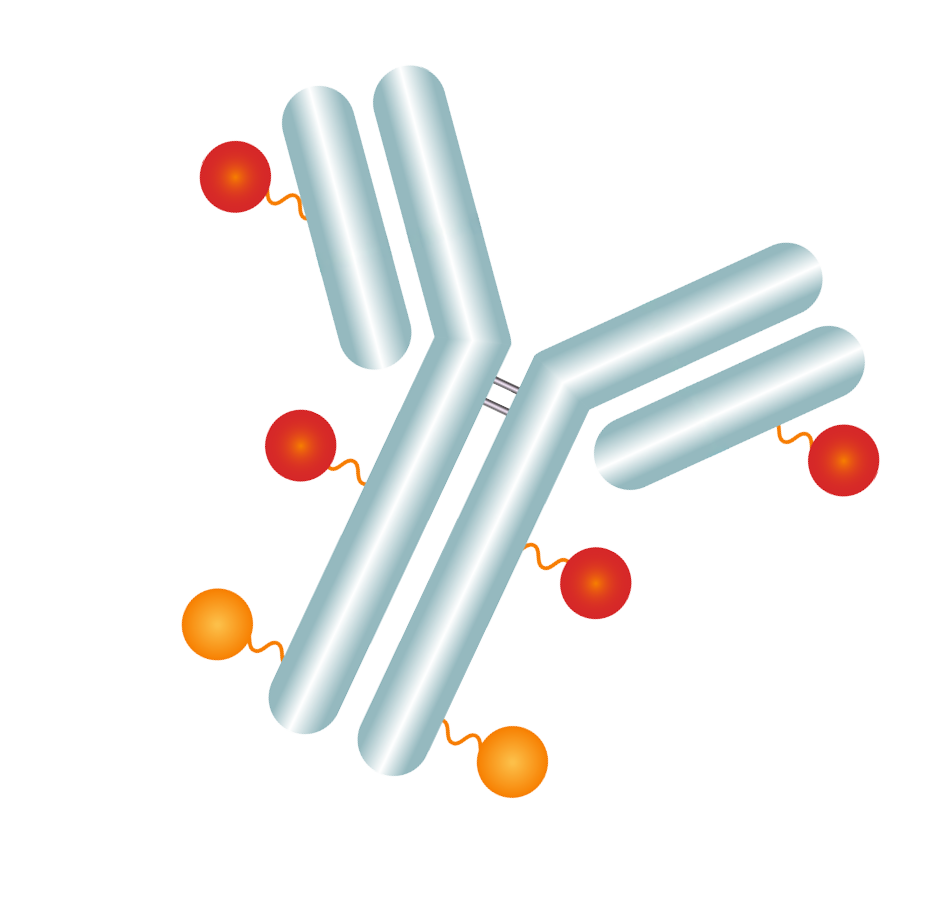
Salsa Bio’s platform has shown the ability to include two different cargos on the same protein, offering an avenue to provide a dual-cargo ADC with orthogonal modes of action and individually tuned DAR values.
ADDITIONAL APPLICATIONS
A Broad Platform
Although our initial focus is on ADCs, the technology offers a broad platform that can be applied to:

Broad ADCs
Opportunities to extend to antibody radionucleotide conjugates (ARCs), degrader antibody conjugates (DACs), and oligonucleotide antibody conjugates (OACs)

Multispecifics
& T-Cell Engagers
Scalable, high-yield route for multispecifics based on site-specific conjugation of multiple proteins thus avoiding problematic expression of complex fusion proteins

Lipidated Protein Therapeutics
Stable, homogeneous attachment of a low molecular weight lipid for PK extension

Targeting of Lipid Nanoparticle
Site-specific, stable attachment of targeting antibodies to the surface of LNPs via a simple chemical approach
OUR LEADERSHIP
Builders, Scientists, and Innovators

Eric Carlson, PhD
Co-founder & CEO
Eric is an accomplished entrepreneur and scientific leader with deep expertise in pharmaceutical development, chemical engineering, and AI/ML software and drug development. He has founded and led multiple companies, recently serving as President & CEO of Protein Metrics (now part of Siemens) through two successful exits. Prior to that he was a founder of Freeslate (now part of Unchained Labs) and had a long career at Symyx Technologies developing high throughput technologies. A chemical engineer with a BS degree from NC State and a PhD from Stanford University, Eric is an inventor on more than 40 patents and has authored widely cited work advancing biopharmaceutical science.


Michael Needels, PhD
Co-founder & CSO
Michael is a creative scientist and successful entrepreneur. Most recently, he served as Chief Technology Officer at Medikine, and previously as Chief Operating Officer at the Fogerty Institute for Innovation. His scientific creativity has led to significant contributions in novel chemistry, including co-inventing the first chemical technology for synthesizing DNA-encoded combinatorial libraries of synthetic compounds during his tenure as Research Director at the Affymax Research Institute. Mike holds a BA in Biochemistry from the University of California, Berkeley, and a PhD in Bioorganic Chemistry from Cornell University. He is an inventor on 15 patents and the author of numerous peer-reviewed publications.